








The world of mobile technology is evolving. The traditional plastic SIM card is being replaced by something invisible: the eSIM, or embedded SIM. This technology allows you to switch carriers, add data plans abroad, and activate a new phone without fumbling with tiny trays and pins.
For example, travelers planning trips to Southeast Asia can prepare in advance. You can easily find out if an eSIM can be used in Vietnam or Thailand, and even get your must-have items sorted before you fly. This preparation means you’re connected securely from the moment you land.
But with this new convenience comes a critical question: Are eSIMs safe?
For many, a digital SIM feels less tangible and potentially more vulnerable than a physical card we can hold. Concerns about hacking, cloning, and tracking are valid. This article will thoroughly explore eSIM security, directly compare it to traditional SIMs, and analyze the real risks of using eSIM technology so you can make an informed decision.
What exactly is an eSIM?
Before analyzing its safety, let’s clarify what an eSIM is. Unlike a removable card, an “embedded SIM” is a small chip permanently built into your phone’s motherboard.
You don’t insert an eSIM; you download a digital “eSIM profile” from your carrier, which contains all the same information your physical SIM holds.
This shift from a physical object to a digital profile is the entire foundation for its new security advantages—and its new vulnerabilities. Of course, to use one, your device must be compatible. Most new smartphones are, but it’s always wise to check the official eSIM compatibility list.
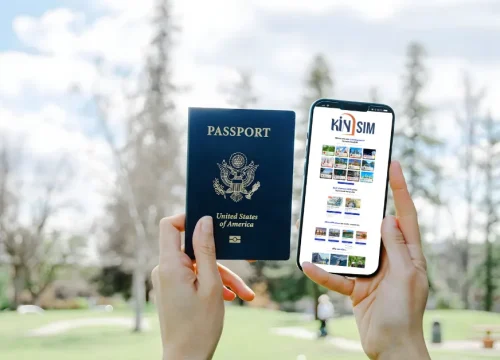
When choosing an eSIM, it’s wise to select a dedicated provider. Services like KiNSim specialize in offering flexible, secure data packages for tourists, which is often a more reliable option than some local carrier apps.
The Core Debate: Are eSIMs Safe?
Let’s address the main query immediately: Are eSIMs safe?
In short: Yes, in most practical scenarios, eSIMs are significantly safer than physical SIM cards.
This enhanced eSIM security comes primarily from overcoming the greatest weakness of a traditional SIM: its physical removability. However, this doesn’t mean eSIMs are invincible. They simply shift the potential security threats away from physical theft and toward digital and social engineering.
Understanding the specific risks of using eSIM requires comparing them threat-for-threat against the old standard.
A Deep Dive: eSIM vs. Physical SIM Security Threats
When people worry about eSIM security, they are usually thinking of a few specific scenarios: theft, cloning, hacking, and swapping. Here’s how the two technologies stack up.
1. Threat: Physical Theft (The Clear Winner: eSIM)
- Physical SIM: A thief steals your phone. Within seconds, they can power it down, eject your SIM card, and place it into their own device. Now they control your phone number. They can immediately start intercepting password reset links for your email, bank accounts, and social media, which are often sent via 2FA (Two-Factor Authentication) text messages.
- eSIM: A thief steals your phone. They cannot physically remove the eSIM. The eSIM profile is locked to the device, which is (hopefully) secured by your PIN, passcode, or biometrics (Face ID, fingerprint). The thief cannot transfer your number to another phone. This makes it much harder for them to immediately exploit your phone number, giving you crucial time to contact your carrier, report the theft, and have your eSIM profile deactivated. This is perhaps the single biggest upgrade for eSIM security.
2. Threat: SIM Swapping (The Risk is Equal)
This is one of the most misunderstood risks of using eSIM technology. A “SIM swap” or “Port-out” scam is a social engineering attack, not a technology hack.
This is how it works: A criminal calls your mobile carrier (like T-Mobile, AT&T, or Viettel) pretending to be you. They use personal information they’ve gathered about you (from data breaches, social media, etc.) to convince the customer service agent that they are the legitimate owner and have “lost” their phone. They then request to activate a new SIM (physical or eSIM) on their device, which deactivates yours.
The Verdict: The technology itself doesn’t matter here. The vulnerability is not the SIM; it’s the human element and the carrier’s identity verification process. Both SIM types are equally vulnerable to this specific attack.
3. Threat: SIM Cloning (The Clear Winner: eSIM)
- Physical SIM: Cloning a physical SIM card is difficult but possible. It requires a criminal to have physical access to your SIM card and specialized hardware (a card reader/writer) to read the card’s unique identifiers and copy them onto a blank card.
- eSIM: This threat is virtually eliminated. Since there is no physical card to access, a criminal cannot “read” it with a cloning device. The provisioning process for an eSIM profile is a secure, encrypted digital handshake between your device and the carrier’s servers, making remote cloning practically impossible.
4. Threat: Hacking and Malware (The Risk is Equal)
Can an eSIM be “hacked?” Not directly. The chip itself is a “secure element” designed to be tamper-resistant.
The real threat is not someone hacking the eSIM but someone hacking your phone’s operating system. If you download a malicious app or click a sophisticated phishing link, an attacker can control the entire device. At that point, it doesn’t matter if you have a physical SIM or an eSIM; they have access to everything. This isn’t a failure of eSIM security itself but rather a general smartphone security issue.
How to Maximize Your eSIM Security
While the technology is a strong starting point, true eSIM security is a partnership between the tech and your habits. Here are essential steps:
- Use a Strong Device Passcode: This is your first and best line of defense. Use a strong alphanumeric passcode or biometrics (Face ID/fingerprint).
- Set Up a Carrier “Port-out” PIN: This is the most important step to prevent SIM swapping. Contact your mobile provider and add a security PIN or password to your account. This PIN will be required before any major changes (like activating a new SIM/eSIM) can be made.
- Be Vigilant Against Phishing: Never scan an eSIM QR code from an email or website you don’t 100% trust. Treat QR codes with the same suspicion as email attachments.
Conclusion: So, Are eSIMs Safe?
We return to our central question: Are eSIMs safe?
The verdict is clear: Yes, eSIMs offer a significant and practical security advantage over physical SIM cards, especially when you want to travel freely.
Their embedded, non-removable nature is a massive improvement for protecting you against the most common threat: physical theft. The digital provisioning process also makes them virtually immune to cloning.
While the new risks of using eSIM (like social engineering for SIM swaps) are real, those same risks also apply to physical SIMs. The security of your number ultimately depends less on the type of SIM you use and more on your carrier’s security policies and your own digital-safety habits.
Frequently Asked Questions (FAQs)
The biggest risk is "SIM swapping." This is not a technology flaw but a social engineering attack where a criminal convinces your phone carrier to transfer your number to their device. You can prevent this by setting up a unique security PIN or password with your carrier.
Yes, significantly. A thief cannot remove the eSIM. This means they can't put your SIM in another phone to intercept 2FA codes. Your number stays locked to your password-protected device, giving you time to contact your carrier and lock the line.
The eSIM chip itself is extremely secure and not vulnerable to viruses. However, your phone can be hacked through malware or phishing. If an attacker gains full control of your phone, they can access your apps regardless of what kind of SIM you have.
Your eSIM profile is safe. You can contact your carrier, and they will deactivate the old profile and help you download a new one onto your replacement device.
Yes, as long as you use a reputable and well-reviewed provider. These services provide data-only plans, which do not link to your primary phone number, adding an extra layer of privacy and security while you travel.